You must log in or # to comment.
pretty looking curves … idk anything abt engineering 😔
Waittt can I explain it to you?
yes !!
Okayyy forgive me in advance cuz im not the best teacher, and I’m also sorry if im making you read too muchhh :<<
An airfoil is essentially just the cross section of the wing
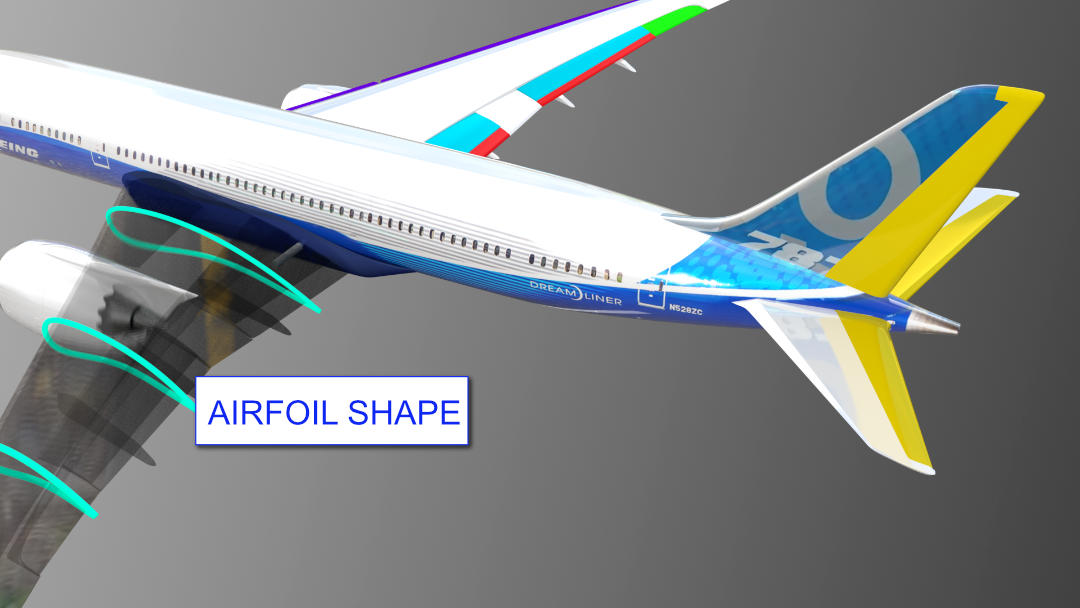
NACA (a US agency) wanted a way to classify these airfoils in the 1930s, so they came up with the NACA 4-digit system, essentially a 4-digit number that classifies the shape. That’s the system I used !!
To draw a 4-digit airfoil, we start with two lines, a camber & chord line. Chord line is essentially just the total length of the foil, spanning from the front and back end.
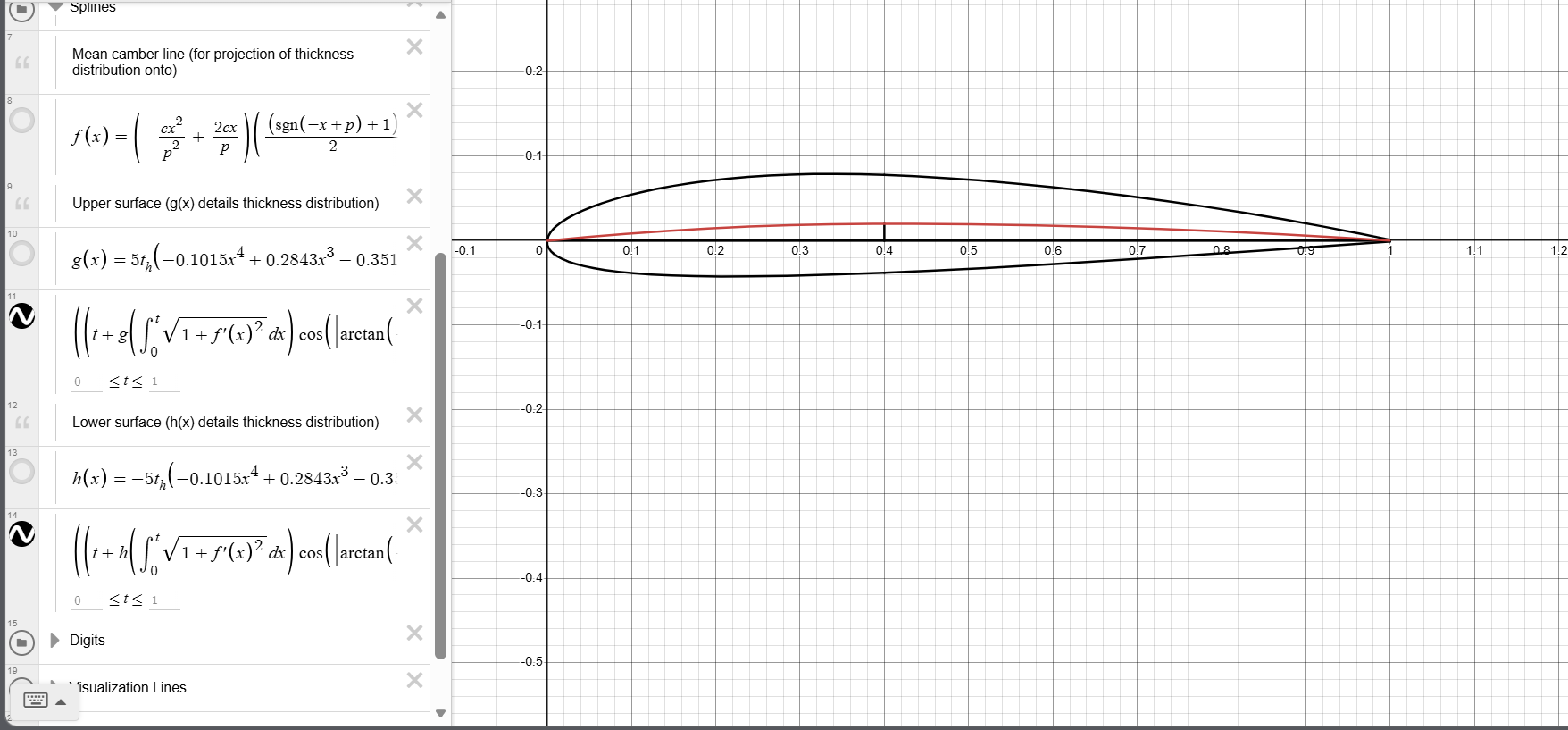
The camber line is the line of loci of each point of the bottom & top surfaces of the foil, so it’s called the ‘mean line’ too. I forgot how I graphed it but I’m pretty sure I used the equation of a spline …
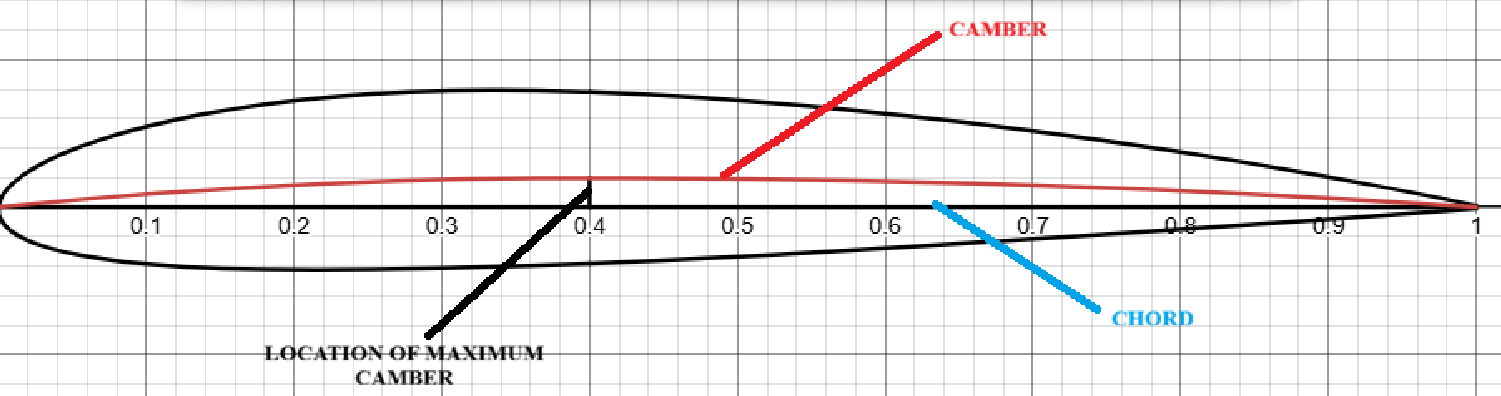
The first digit is the maximum height of the camber line as a % of the chord length. So in the airfoil NACA 2412, if the chord is 100cm, the max height of camber is 2cm!
The second digit is a tenth of the location of the maximum camber height along the length of the airfoil, as a percent of the chord length.
The last two digits are the maximum thickness of the airfoil as a percent of the chord. So in NACA 2412, the maximum thickness is 12% the chord.
So once you’ve drawn the camber line, you need to project a thickness distribution on top of it and under it to make the actual surfaces of the airfoil. The standard thickness distribution is a quartic u can find online. I projected it using a nonlinear x-axis transformation (not the actual term since idk what it is.) This is how I did it:
https://www.desmos.com/calculator/buf7ztiabz
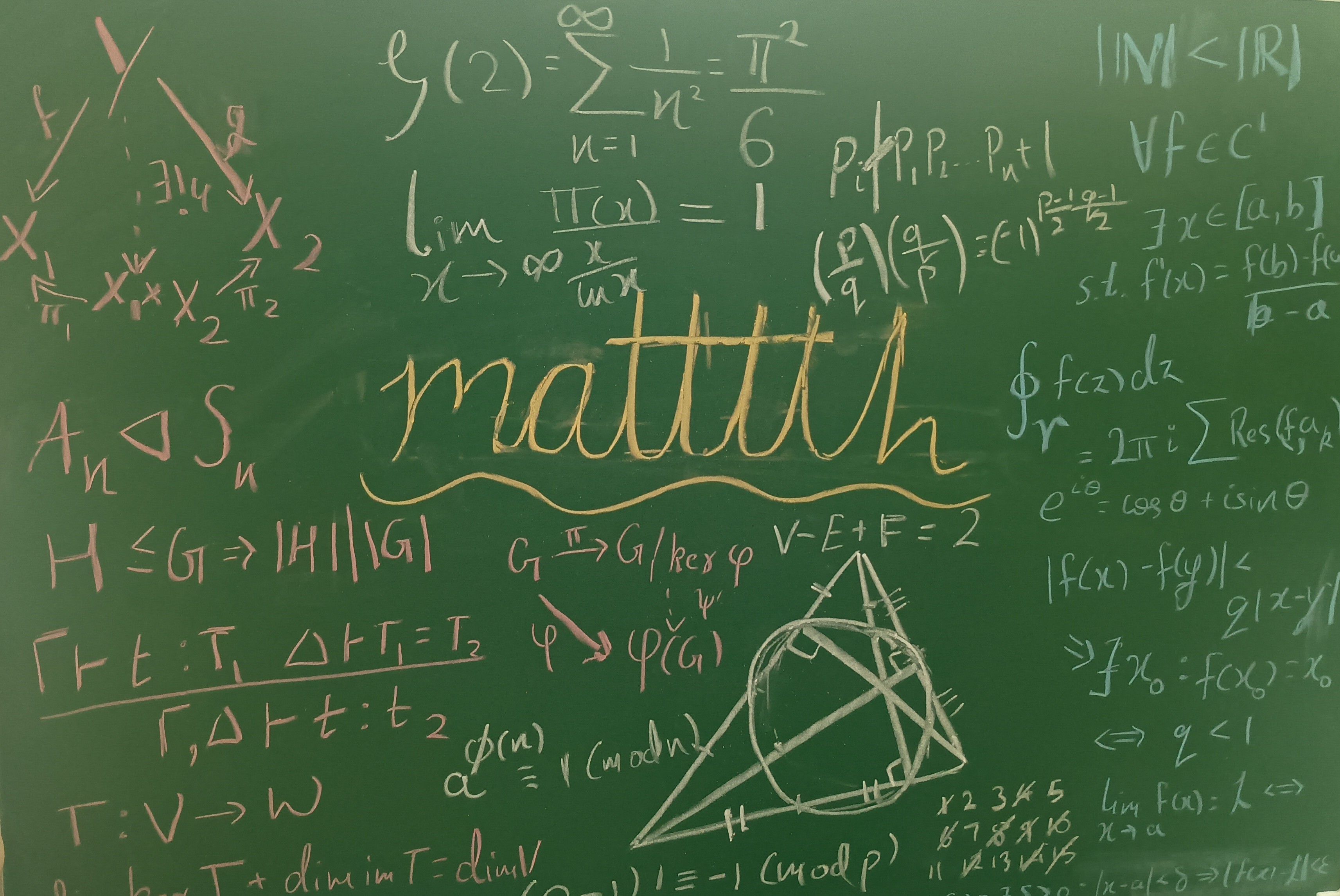
And that projected distribution becomes the shape! I had a bit of fun deriving a method to rotate the function aswl :>>> https://www.desmos.com/calculator/movklulsir
I hope this is at the very least coherent lol, my apologies if not
Uh so this post is 3 weeks old but I don’t care.
This is really beautiful, I’m not an aero nerd, but I’ve programmed a particle physics simulation for my physics class which I’ve been putting random shapes into. They’re all fairly simplistic, but I’m really tempted to try writing this one in now.